
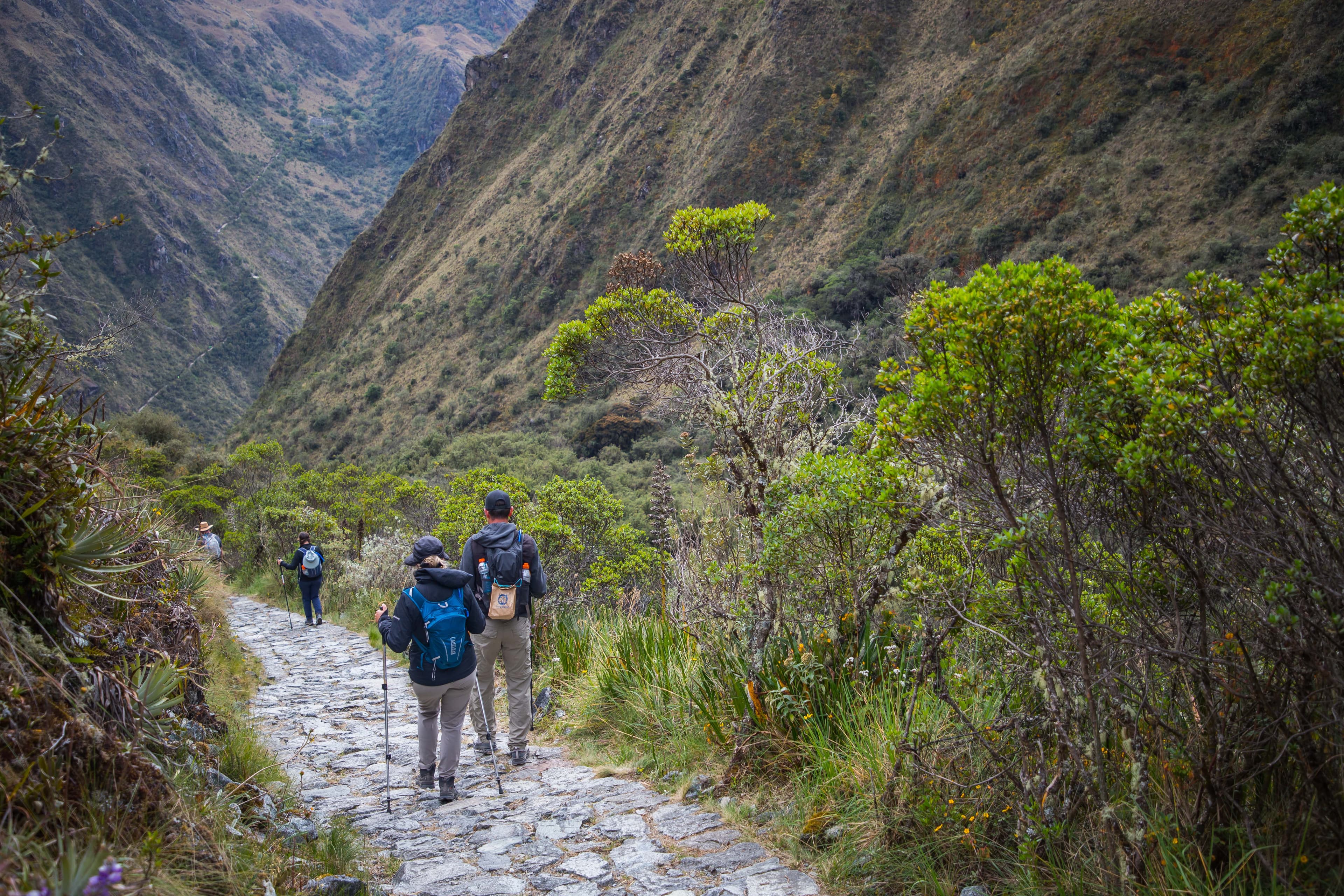
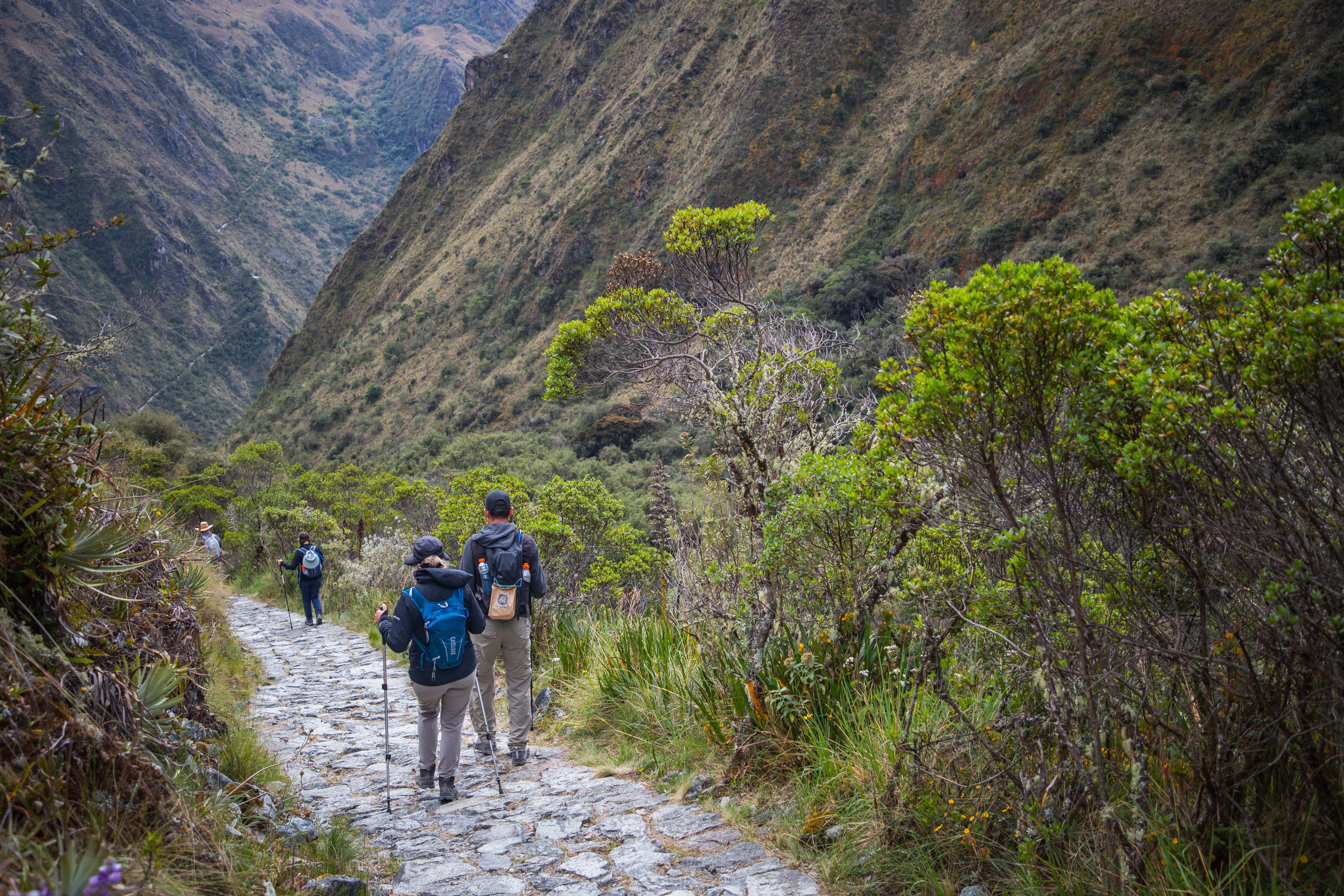
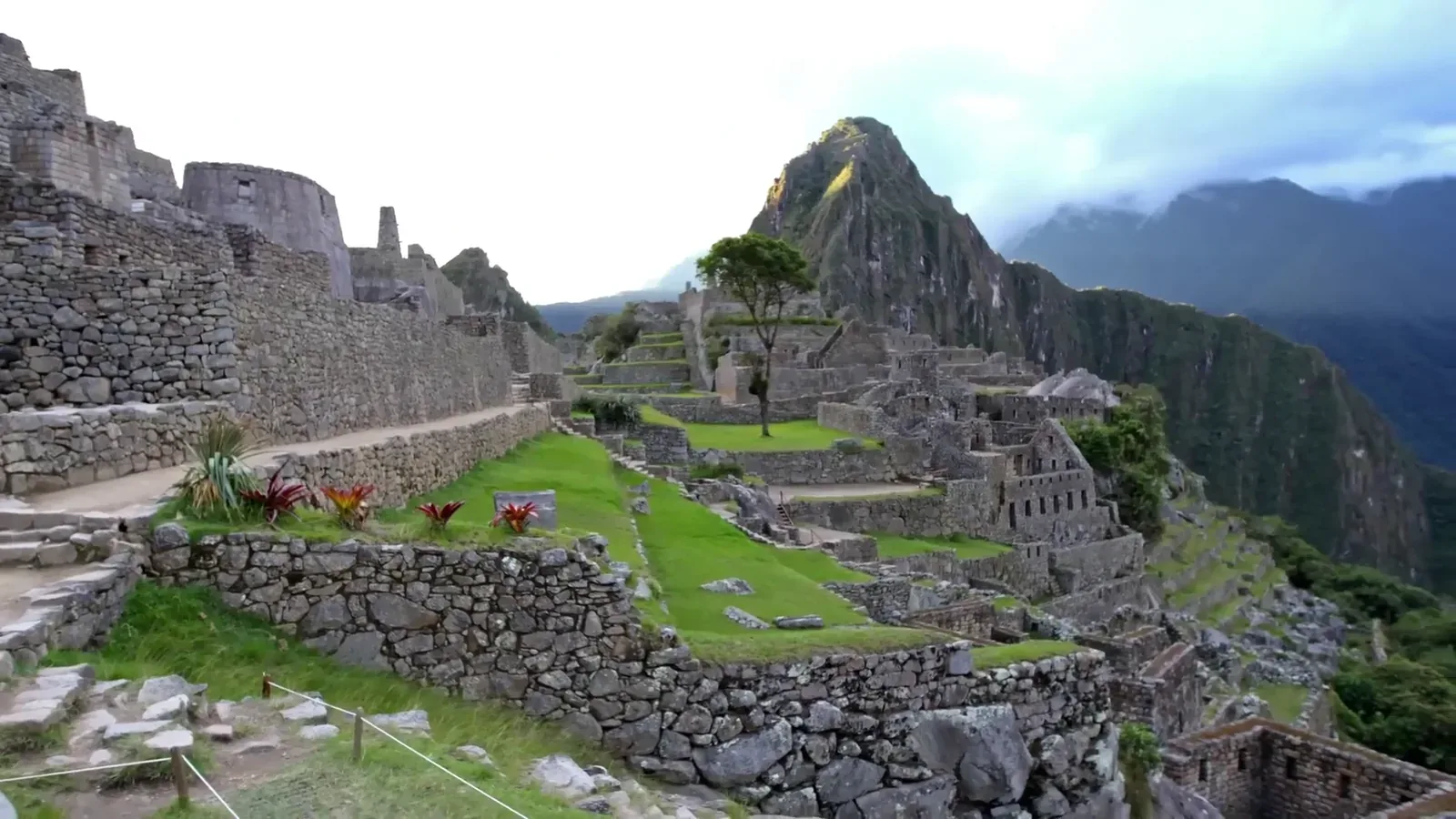
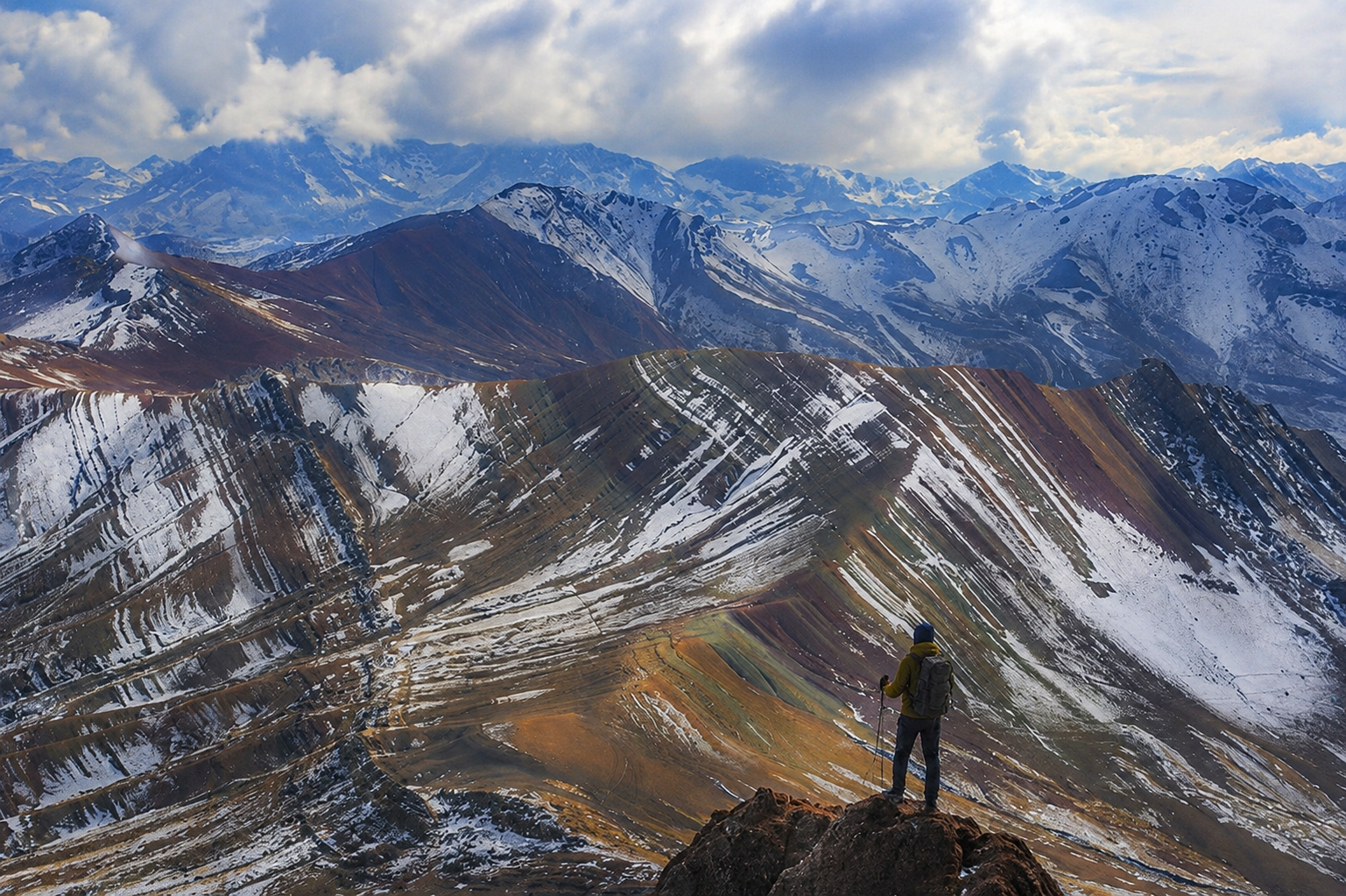
Dreaming of hiking the Classic Inca Trail to Machu Picchu? Before you reach the Sun Gate, you'll climb to 4,215 meters (13,828 feet), where the thinner air makes every step more challenging.
Don't let the altitude catch you by surprise. This guide covers everything you need to know, from acclimatization and altitude sickness to hydration, training, and expert local tips, so you can enjoy one of the world's greatest treks with confidence.
With the right acclimatization plan, proper hydration, smart pacing, and a little preparation before your trip, thousands of travelers safely complete the Inca Trail every year.
HIGHEST POINT | TOUGHEST DAY | ACCLIMATIZE | MACHU PICCHU |
4,215 m / 13,828 ft | Day 2 | 2–3 days | 2,430 m / 7,972 ft |
In This Guide
• Highest altitude and why it feels difficult | • Training, hydration, medication, and water safety |
• How to acclimatize before the trek | • Inca Trail altitude compared with other famous treks |
• Daily elevation profile from KM 82 to Machu Picchu | • Frequently asked questions before you book |
• Altitude sickness symptoms and emergency signs |
PLANNING YOUR TREK?
See the full route, day-by-day experience, and trip details for the classic Inca Trail 4D/3N
What is the highest altitude on the Inca Trail?
The highest point on the Classic Inca Trail is Dead Woman's Pass (Warmiwañusca) at 4,215 meters (13,828 ft). Most hikers reach this point on Day 2, making it the most physically demanding section of the trek. Spending two or three days acclimatizing before starting the hike greatly improves your chances of completing the trail comfortably.
Why Is the Inca Trail Altitude So Challenging?
Many first-time hikers think the Inca Trail is challenging because of its distance. In fact, altitude is what makes this trek truly demanding. As you climb higher into the Andes, the air becomes thinner, delivering less oxygen with every breath and making even moderate climbs feel more difficult.
The toughest section comes on Day 2, when hikers reach Dead Woman's Pass (Warmiwañusca) at 4,215 meters (13,828 feet), the highest point of the Classic Inca Trail. At this elevation, oxygen levels are lower than at sea level, so slower pacing and frequent breaks are completely normal.
Fortunately, most trekkers who spend 2–3 days acclimatizing in Cusco or the Sacred Valley complete the trail without serious altitude-related problems.
What Is the Best Altitude Acclimatization Guide for the Inca Trail?
If there's one piece of advice every experienced guide in Peru agrees on, it's this:
LOCAL GUIDE TIP
Never fly into Cusco and start the Inca Trail the next morning.
Your body needs time to adjust to the thinner air, and starting the Inca Trail too soon significantly increases your risk of altitude sickness.
The best approach is to arrive in Peru 2–3 days before your trek. Use this time to explore Cusco or the Sacred Valley, stay hydrated, and let your body gradually acclimatize. Many hikers choose to spend their first night in the Sacred Valley, which sits about 600 meters (2,000 feet) lower than Cusco. Sleeping at a lower elevation can make the transition to high altitude more comfortable.
Think of acclimatization as part of the adventure. Those extra days let you explore Inca sites, local markets, and stunning Andean scenery before your trek even begins.
How Do Altitude Levels Vary Along the Inca Trail Route?
One of the reasons the Classic Inca Trail feels more challenging than many hikers expect is that the altitude changes constantly. You're not simply climbing higher each day, instead, you'll ascend steep mountain passes, descend into lush valleys, and climb again before finally reaching Machu Picchu.
These continuous elevation changes require your body to adapt while you're still hiking, which is why good acclimatization before the trek is so important.
Here's how the altitude changes throughout the journey:
Location | Elevation |
Cusco | 3,399 m (11,152 ft) |
Sacred Valley (Ollantaytambo) | 2,800–2,900 m (9,186–9,514 ft) |
KM 82 (Trailhead) | 2,720 m (8,923 ft) |
Llactapata | 2,840 m (9,317 ft) |
Ayapata Camp | 3,300 m (10,827 ft) |
Dead Woman's Pass | 4,215 m (13,828 ft) |
Pacaymayo camp | 3,600 m (11,811 ft) |
Runkurakay Pass | 3,950 m (12,959 ft) |
Phuyupatamarca camp | 3,650 m (11,975 ft) |
Wiñay Wayna camp | 2,650 m (8,694 ft) |
Machu Picchu | 2,430 m (7,972 ft) |
Notice that the highest point of the trek comes well before Machu Picchu. By the time you arrive at the ancient citadel, you've already crossed the most physically demanding section and descended nearly 1,800 meters (5,900 feet) from the trail's highest pass.
This gradual descent explains why many hikers say the final morning feels much easier, even though you've already completed one of the toughest hikes in South America.
What Is the Typical Daily Elevation Profile of the Most Popular Inca Trail Trek?
Every day on the Classic Inca Trail offers a completely different experience. Some days are all about climbing through the Andes, while others reward you with long descents, cloud forests, and spectacular archaeological sites along the trail.
Knowing what to expect each day helps you pace yourself and conserve energy for the sections that matter most.
Day 1: A Gentle Introduction
Starting elevation: 2,720 m (8,923 ft)
Ending elevation: 3,300 m (10,827 ft)
Elevation gain: 607 m (1,991 ft)
Elevation loss: 340 m (1,115 ft)
Distance: 12 km (7.45 miles)
Hiking time: 5–6 hours
Your adventure begins at KM 82, the official entrance to the Classic Inca Trail. Following the Urubamba River, the trail winds through fertile valleys, traditional farming communities, and the impressive archaeological site of Llactapata, offering a gentle introduction to both the Andean landscape and Inca history.
Although you'll gain nearly 600 meters (1,970 feet) throughout the day, the ascent is gradual enough for most hikers to enjoy the scenery without feeling overly challenged. Since your body is still adapting to the altitude, this is the perfect day to walk at a comfortable pace, stay hydrated, and conserve energy for the tougher days ahead.
Your first night is spent at Wayllabamba Camp (3,300 m / 10,827 ft), where the thinner mountain air becomes more noticeable as your acclimatization continues.
Day 2: The Highest and Most Challenging Day
Highest elevation: Dead Woman's Pass – 4,215 m (13,828 ft)
Elevation gain: 1,274 m (4,179 ft)
Elevation loss: 628 m (2,060 ft)
Distance: 8 km (4.97 miles)
Hiking time: 7–8 hours
Day 2 is widely considered the most demanding part of the Classic Inca Trail.
Leaving Wayllabamba before sunrise, you'll begin a steady climb through changing ecosystems toward Warmiwañusca (Dead Woman's Pass), the highest point on the route. At 4,215 meters (13,828 feet), oxygen levels are about 40% lower than at sea level, making every uphill step feel more challenging.
It's completely normal to notice:
• Faster breathing
• A slower walking pace
• More frequent rest breaks
• An increased heart rate
Reaching the summit is one of the greatest achievements of the trek. On clear days, you'll enjoy breathtaking views of the surrounding Andes before descending to Pacaymayo Camp (3,595 m / 11,794 ft) for a well-earned rest.
Day 3: Ancient Inca Sites Above the Clouds
Highest elevation: Runkurakay Pass – 3,950 m (12,959 ft)
Elevation gain: 632 m (2,073 ft)
Elevation loss: 1,518 m (4,980 ft)
Distance: 13 km (8.07 miles)
Hiking time: 8–9 hours
Many experienced trekkers describe Day 3 as the most scenic section of the entire Inca Trail.
After climbing to Runkurakay Pass, the trail follows beautifully preserved stone paths through cloud forests and several remarkable Inca archaeological sites, including Runkurakay, Sayacmarca, Phuyupatamarca, Intipata, and Wiñay Wayna.
Although you'll spend much of the day above 3,000 meters, the route alternates between climbs and descents, making it feel less strenuous than the previous day while rewarding hikers with spectacular mountain views around every corner.
You'll spend your final night at Wiñay Wayna Camp (2,679 m / 8,789 ft), surrounded by lush vegetation and one of the most beautiful archaeological sites on the trail.
Day 4: Through the Sun Gate to Machu Picchu
Ending elevation: Machu Picchu – 2,430 m (7,972 ft)
Elevation gain: 185 m (606 ft)
Elevation loss: 451 m (1,479 ft)
Distance: 7 km (4.34 miles)
Hiking time: 2–3 hours
The final day begins well before sunrise as hikers make their way toward Inti Punku (the Sun Gate).
As the morning light reveals the first panoramic view of Machu Picchu, it's easy to understand why this moment is considered one of the highlights of the entire trek.
By now, you've descended significantly from the highest sections of the trail, making breathing noticeably easier as you approach the Lost City of the Incas.
After entering Machu Picchu, you'll enjoy a guided tour of the ancient citadel before continuing your journey to Aguas Calientes and returning to Cusco.
Symptoms of high altitude sickness on multi-day treks?
One of the biggest misconceptions about altitude sickness is that it only affects people who are out of shape.
The truth is that anyone can develop altitude sickness, whether you're an experienced marathon runner or a first-time hiker. Fitness improves endurance, but it doesn't prevent your body from reacting to lower oxygen levels.
Symptoms usually appear within the first 6 to 24 hours after arriving at high altitude and often become more noticeable during the climb to Dead Woman's Pass.
The most common symptoms include:
• Persistent headache
• Fatigue or unusual tiredness
• Shortness of breath while walking
• Dizziness
• Loss of appetite
• Mild nausea
• Difficulty sleeping
These symptoms are generally mild and improve as your body acclimatizes.
However, some signs should never be ignored.
If a hiker develops severe shortness of breath while resting, confusion, difficulty walking in a straight line, chest tightness, or repeated vomiting, immediate descent and medical attention are essential. Although these serious complications are rare on the Inca Trail, licensed guides are trained to recognize them quickly and respond appropriately.
WHEN TO DESCEND The best treatment for severe altitude illness is always the same: descend to a lower elevation as soon as possible. |
How Your Body Changes at High Altitude
As you gain elevation on the Inca Trail, the amount of available oxygen gradually decreases, forcing your body to work harder with every step. Understanding how altitude affects you helps set realistic expectations and explains why acclimatization is essential before starting the trek. While everyone reacts differently, the table below shows the most common physical changes travelers experience at each altitude level.
Altitude | What Happens to Your Body |
2,500 m (8,200 ft) | Your breathing becomes slightly faster as your body starts adjusting to lower oxygen levels. |
3,000 m (9,842 ft) | You may notice mild fatigue, especially when climbing stairs or walking uphill. |
3,500 m (11,483 ft) | Some travelers experience headaches, reduced appetite, or difficulty sleeping. |
4,000 m (13,123 ft) | Physical effort feels much greater, and frequent breaks become normal. |
4,215 m (13,828 ft) | At Dead Woman's Pass, oxygen availability is about 40% lower than at sea level, making this the most demanding part of the trek. |
Best Medications to Prevent Altitude Sickness for a High-Altitude Trek
One of the questions travelers ask most before hiking the Inca Trail is whether they should take medication for altitude sickness.
The answer depends on your health, previous experience at high altitude, and your doctor's recommendation. While there isn't a medication that completely prevents altitude sickness, some options can reduce the risk or help relieve symptoms while your body acclimatizes.
Acetazolamide (Diamox)
The most commonly prescribed medication for altitude sickness is Acetazolamide, better known by its brand name Diamox or soroche pills.
Rather than masking symptoms, Diamox helps your body adjust more quickly to lower oxygen levels by stimulating breathing. Many travelers begin taking it 24 to 48 hours before reaching high altitude, but it should only be used under medical guidance, because each body reacts differently.
Like any medication, it may cause side effects, including tingling in the fingers or toes, more frequent urination, or changes in taste.
Pain Relievers
A mild headache is one of the earliest symptoms of altitude sickness.
Over-the-counter medications such as ibuprofen or acetaminophen (paracetamol) may help relieve discomfort, but they should never be used to ignore worsening symptoms.
If your headache becomes severe or is accompanied by nausea, dizziness, or difficulty walking, it's time to stop hiking and notify your guide.
Coca Tea: Peru's Traditional Remedy
In Peru, many visitors are welcomed with a warm cup of coca tea (mate de coca) shortly after arriving in Cusco.
For generations, local communities have used coca leaves to help ease the discomfort associated with high altitude. Many travelers say it helps them feel better, although scientific studies have produced mixed results regarding its effectiveness against altitude sickness.
Think of coca tea as a traditional cultural practice rather than a substitute for proper acclimatization.
MEDICAL NOTE Important: Always consult your physician before taking any medication, especially if you have heart conditions, respiratory diseases, are pregnant, or take prescription medications. |
What Specific Training Exercises Help with High-Altitude Endurance?
You can't train your lungs to create more oxygen before arriving in Peru, but you can prepare your body to hike more efficiently.
One of the biggest surprises for first-time trekkers is that the Inca Trail isn't just about endurance. It's also about hiking comfortably for several consecutive days while carrying a backpack over thousands of ancient stone steps.
The stronger your body is before the trek, the more energy you'll have to enjoy the scenery instead of simply focusing on reaching camp.
Prioritize Cardiovascular Fitness
Your heart and lungs do most of the work during long climbs.
Activities such as:
• Hiking
• Trail running
• Cycling
• Swimming
• Stair climbing
help improve endurance and make sustained uphill walking feel much easier.
Aim for 30 to 60 minutes of cardio, three to five times per week, during the two or three months before your trip.
Strengthen Your Legs
The Inca Trail is famous for its endless stone staircases.
Building lower-body strength before your trip can significantly reduce fatigue, especially during the long descents after Dead Woman's Pass.
Focus on exercises such as:
• Squats
• Walking lunges
• Bulgarian split squats
• Step-ups onto a bench
• Romanian deadlifts
• Calf raises
Strong legs also reduce stress on your knees, which many hikers find more challenging than the climbs themselves.
Don't Forget Your Core
A strong core improves balance and posture while carrying a daypack over uneven terrain.
Simple exercises like:
• Planks
• Side planks
• Bird dogs
• Dead bugs
can make long hiking days much more comfortable.
Practice Hiking with a Backpack
Perhaps the most valuable training exercise is simply going hiking.
Try to hike once a week with the backpack you plan to use in Peru. Start with a light load and gradually increase the weight to 5–7 kg (11–15 lbs).
If you can find trails with long climbs or lots of stairs, even better.
Nothing prepares you for the Inca Trail like walking for several hours on uneven terrain.
What Are the Best Methods for Purifying Water on Long High-Altitude Treks?
Staying hydrated is one of the most effective ways to help your body adapt to altitude, but drinking untreated water in the Andes is never recommended.
Although mountain streams along the Inca Trail may look crystal clear, they can still contain bacteria, parasites, or viruses from wildlife and livestock upstream. That's why every experienced guide follows strict water purification practices.
If you're hiking with a licensed Inca Trail operator, clean drinking water is typically provided throughout the trek. Most companies boil and filter water before serving it at breakfast, lunch, dinner, and camp, so you'll only need to refill your reusable bottle or hydration bladder.
However, if you're hiking independently on another high-altitude route in Peru, you'll need a reliable way to purify water yourself.
Water Filters
Portable water filters are among the most popular options for trekkers because they're lightweight, easy to use, and effective against most bacteria and protozoa.
They're ideal if you need to refill from streams or natural water sources during long hikes.
UV Water Purifiers
Ultraviolet purification pens use UV light to neutralize microorganisms in just a few minutes.
They're fast and convenient, but they work best with clear water. If the water is cloudy, you'll need to filter it first.
Purification Tablets
Chlorine dioxide tablets are compact, inexpensive, and highly effective against bacteria, viruses, and parasites.
The only downside is that they require waiting time before the water is safe to drink, making them better suited as a backup option.
Boiling Water
Boiling remains one of the safest purification methods available.
At high altitude, however, water boils at a lower temperature, so it should remain at a rolling boil for at least one minute, or longer at very high elevations, to ensure effective purification.
Which Method Is Best?
For most trekkers, a combination of filtration and chemical purification offers the highest level of protection when drinking untreated water.
On the Classic Inca Trail, though, your tour operator will usually handle water purification, allowing you to focus on enjoying the hike rather than worrying about water safety.
Where Can I Find Altitude-Specific Hydration Products Recommended for Inca Trail Trekking?
When people think about altitude sickness, they often focus on oxygen.
Experienced guides, however, will tell you that hydration is just as important.
At high elevations, your body loses water more quickly through breathing, sweating, and even sleeping. The dry mountain air accelerates dehydration, which can worsen headaches, fatigue, and other symptoms commonly associated with altitude sickness.
That's why drinking water consistently throughout the day is far more effective than trying to "catch up" once you feel thirsty.
How Much Water Should You Drink?
Most hikers should aim for approximately:
• 3–4 liters (100–135 oz) per day while trekking.
• Even more during hot or particularly strenuous hiking days.
Instead of drinking large amounts at once, take small sips frequently throughout the day.
Electrolytes Matter Too
Water alone isn't always enough.
As you sweat, your body also loses important minerals such as sodium, potassium, and magnesium. Replacing these electrolytes helps maintain muscle function and supports proper hydration.
Many experienced trekkers pack:
• Electrolyte tablets
• Hydration powders
• Oral rehydration salts
• Isotonic drink mixes
These products weigh very little and can make a noticeable difference during long climbing days.
Don't Wait Until You're Thirsty
One of the easiest mistakes to avoid is waiting until you feel thirsty.
By the time thirst appears, your body is already beginning to dehydrate.
Instead, develop the habit of taking a few sips every 15–20 minutes, especially during the long ascent to Dead Woman's Pass.
Good hydration won't eliminate altitude sickness—but it can significantly reduce its impact and help you recover faster after each day of hiking.
Options for Portable Oxygen Devices for Emergency Use on Remote Trails
Many travelers wonder if they should carry a portable oxygen canister on the Inca Trail.
Portable oxygen can provide temporary relief if someone experiences breathing difficulties, but it doesn't cure altitude sickness. It simply increases oxygen intake for a short period and should never replace proper acclimatization or medical treatment.
Do Tour Guides Carry Oxygen?
Yes. Licensed Inca Trail tour operators are required to carry emergency equipment, and many guides hike with:
• Portable oxygen cylinders
• Comprehensive first-aid kits
• Emergency communication devices
• Basic medications for common trekking illnesses
These resources are intended for emergencies and are used only when necessary.
Should You Bring Your Own Oxygen?
For most healthy hikers, it's unnecessary.
Disposable oxygen canisters are relatively small and contain only a limited amount of oxygen, often lasting just a few minutes. They're also considerably less effective than allowing your body to acclimatize naturally before the trek.
If you have a medical condition affecting your lungs or heart, consult your physician before booking the Inca Trail.
The Best Emergency Plan
No device is more effective than making smart decisions on the trail.
If symptoms become severe, the safest response is to:
• Stop hiking immediately.
• Inform your guide.
• Rest if appropriate.
• Descend to a lower elevation if symptoms worsen.
Professional guides are trained to recognize serious altitude-related illnesses long before they become life-threatening.
Remember, reaching Machu Picchu is never worth risking your health.
Inca Trail Altitude vs Other Famous Treks
Before booking, many travelers compare the Inca Trail with other high-altitude treks. The table below puts the route in context by highest elevation and overall difficulty.
Trek | Highest Elevation | Difficulty |
Classic Inca Trail | 4,215 m | Moderate to Challenging |
Salkantay Trek | 4,650 m | Challenging |
Lares Trek | 4,450 m | Moderate |
Choquequirao Trek | 3,100 m | Very Challenging |
Everest Base Camp | 5,364 m | Challenging |
Kilimanjaro | 5,895 m | Very Challenging |
10 Mistakes That Make the Inca Trail Feel Harder
Arriving in Cusco the day before the trek.
Hiking too fast on the first day.
Drinking alcohol before your hike.
Not drinking enough water.
Carrying an overweight backpack.
Wearing brand-new hiking boots.
Skipping breakfast.
Ignoring early symptoms of altitude sickness.
Not training before the trip.
Sleeping poorly before the trek.
Frequently Asked Questions About Inca Trail Altitude
What Is the Highest Point on the Inca Trail?
The highest point on the Classic Inca Trail is Dead Woman's Pass (Warmiwañusca), located at 4,215 meters (13,828 feet) above sea level. Most hikers reach the pass on Day 2 after a challenging uphill climb that typically takes 4–7 hours, depending on fitness, pace, and acclimatization. Because the air contains significantly less oxygen at this elevation, many hikers notice slower breathing and increased fatigue. Reaching the summit is considered the most demanding, and one of the most rewarding, moments of the entire trek.
Is the Inca Trail Higher Than Machu Picchu?
Yes. The highest section of the Inca Trail is much higher than Machu Picchu. While the citadel sits at 2,430 meters (7,972 feet), hikers climb to 4,215 meters (13,828 feet) at Dead Woman's Pass before descending toward the cloud forest. This difference of nearly 1,800 meters (5,900 feet) explains why many travelers find breathing easier on the final day as they approach Machu Picchu.
Can Beginners Hike the Inca Trail?
Absolutely. Every year, thousands of first-time hikers successfully complete the Classic Inca Trail. You don't need to be an athlete, but you should have a reasonable level of fitness and prepare before your trip. Spending 2–3 days acclimatizing in Cusco or the Sacred Valley, training for several weeks, staying hydrated, and hiking at your own pace greatly improve your chances of having an enjoyable experience.
How Fit Do You Need to Be for the Inca Trail?
You don't need marathon-level fitness, but you should be comfortable hiking for 6–8 hours a day over uneven terrain. The trail includes long uphill climbs, thousands of stone steps, and high-altitude mountain passes. Most hikers benefit from 8–12 weeks of preparation, including cardio, leg-strength exercises, and practice hikes with a backpack. The fitter you are, the more you'll enjoy the scenery instead of focusing only on the physical effort.
Is There Less Oxygen on the Inca Trail?
Yes. At Dead Woman's Pass (4,215 m / 13,828 ft), the lower air pressure means each breath delivers about 40% less available oxygen than at sea level. The amount of oxygen in the atmosphere doesn't change, but your body absorbs less with every breath. As a result, hikers naturally walk more slowly, breathe harder, and take more frequent breaks, especially during steep climbs.
Does Everyone Get Altitude Sickness on the Inca Trail?
No. Some hikers experience mild symptoms such as headaches, fatigue, or shortness of breath, while others feel almost no effects at all. Everyone responds differently to altitude. The best way to reduce your risk is to acclimatize for 2–3 days, drink plenty of water, eat light meals, avoid excessive alcohol, and maintain a slow, steady hiking pace. Serious altitude sickness is uncommon but should always be treated immediately.
Is the Inca Trail Worth It Despite the Altitude?
For most hikers, the answer is absolutely. The altitude adds to the challenge, but it's also part of what makes the experience so rewarding. Along the way, you'll cross mountain passes, hike through cloud forests, explore remarkable Inca archaeological sites, and arrive at Machu Picchu through the Sun Gate, an entrance reserved exclusively for Inca Trail hikers. Many travelers say the effort required by the altitude makes reaching Machu Picchu even more unforgettable.